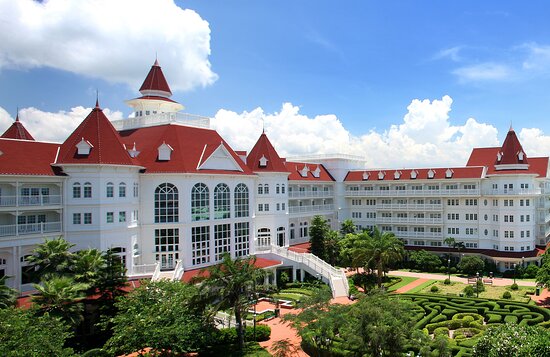

As stated in my previous post, I was invited to speak in the Asian Bloggers and Social Media Conference 2010 on 30 July 2010.
I was the 1st speaker of Day 2 programme. I arrived around 8.15am and there were no delegates yet.
As usual, it will be helpful for me to get a feel of look from the stage.
My speech started at 9.00am.
I was given the topic of “Blogging and the Law: Where Should Bloggers Draw the Boundary with their Content?”
During my introduction, I pointed out that internet is not a legal vacuum, namely wrongdoings / misconducts in cyberworld are also subject to the relevant laws.
I also analyzed the legal risk faced by a bloggers as oppose to journalist.
“…The difference between a blogger and the reporter at local newspaper is that in many cases, bloggers may not have the benefit of training or sufficient resources to help them to determine whether what they write is legal or illegal.
And also due to the fact that blogging is comparatively new, there are not many cases decided on the legal issues involving blogging activities. Moreover, many such issues are yet to be tested in court.
In view of the above, we as bloggers seem to be more likely to expose to legal liability than a journalist….”
I went on to analyze and to explain the current provisions in law in relation to blogging practices.
Broadly there are 2 types of laws that apply to blogging activities, i.e. criminal and civil.
I had also cited many cases where bloggers were brought to the court of law under both criminal and civil actions.
After elaborating the relevant laws, I told the audience that bloggers should practice self-censorship.
“Blogosphere is just like a normal society or community, in order to preserve one’s right, others’ right or freedom must be limited. This is the basic rule of order.
Legal action is expensive and time consuming in this country. Not many afford to seek for legal remedy.
As such, it is necessary for blogger to practise self – censorship in order to build a healthy and trust-worthy online community.”
I concluded my speech by asserting my view that there is a need to formulate a more blogger-friendly law due to the interactive nature of blogging activities.
Receiving memorial award from the organiser after my speech.
During the refreshment break, I was interviewed by the journalist from a local news provider, News Straits Times, please see the video posted at their Gadget website.
The Start, the most famous English newspaper publisher has also interviewed me on the topic of “Tweet below the law”
By the way, just to mentioned that since the owner of Air Asia, Tony Fernandes was also one of the speakers, I manage to took a photo together with him.
(He was holding my business card, hehehe!)
By the way, very soon I will be speaking in another bloggers’ conference. I will update you later.
Many popular bloggers like Kenny Sia and Rocky’s bru are also invited to speak at this conference.
They are anticipating a crowd of 250 – 350.
The price of admission ticket range from RM199 – RM120 per person.
A good news for my blog readers – I still have 1 more complimentary ticket available to be given out. If you are a blogger and are keen to attend this conference, please email your Full Name, IC No. and Blog url to my email eddie[at]laweddie.com. This is strictly on first come first serve basis. I will reply your email and tell you how to collect the ticket, if you are the lucky one.
By Fahri Azzat
(This article was first published at www.loyarburok.com)
A consideration of whether the phrase ‘The Non-Practising Advocate & Solicitor’, which is increasingly popular and used by law graduates who were called to the Malaysian Bar and did not or have left the practise of law, is meaningful.
There are many categories of people that relate to the practise of law.
One of those categories comprise of law graduates who either (i) never bothered to be qualified as lawyers or (ii) who have qualified and did not practise, or (iii) left soon after tasting practise.
Those in subcategory (i) often mistake if not insist that the completion of an undergraduate course in law as sufficient qualification for the entry into the arcane practise of law. It is a mistake because they have no comprehension whatsoever that the practise of law is a whole different nastier, more aggressive beast than the comparatively genteel study of law. A similar comparison would be that of playing with a kitten as compared to trying to kill a tiger with nothing except your already shredded loin cloth.
Any respectable practising lawyer will tell you (of which I make no claims to since I am a LoyarBurok), that an undergraduate degree is merely proof that you stayed the course and paid enough attention to pass your exams during that 3 year holiday which masqueraded as an undergraduate program. The sole function of that degree is to help you slide your foot into the narrow opening to the entrance door to the legal realm. It is important to appreciate that the degree does not enable you to pass through.
For that you need to take a professional exam. In England it is the Bar Vocational Course (for barristers, a court going lawyer) or a Legal Practise Course (for solicitors, who often do not go to court and carry out corporate and conveyancing transactions). In Singapore you have the Postgraduate Practical Law Course (PLC). In Malaysia it is the dreaded, roulette game known as the ‘Certificate of Legal Practise‘, more popularly known among budding lawyers as the Legal Qualifying Exam of Death (because of the high repeated failure rate), which really should be run by Genting Holdings Berhad instead of the Legal Profession Qualifying Board of Malaysia.
When you pass the relevant exams only then can a lowly law graduate remotely associate himself with a lawyer. A law graduate had best not attempt to pass himself off as one in the company of true lawyers. He will find himself come up short mighty quick among them. If and when such posturing is discovered, the lawyers are entitled in equity, if not law, to laugh heartily and derogatorily at the law graduate’s misplaced sense of occupation. They are also encouraged to point emphatically and ridicule the unfortunate law graduate, for his own benefit of course, so that his error is so seared into his experience that he never attempts such foolish a thing again.
After all, to be a lawyer is bad enough, to pretend to be one is just criminal. And so it is heartening to note that impersonating a lawyer is an offence under section 205 of the Penal Code punishable with a maximum of 3 years and fine, or both if you are so odious a character. So if you hear a mere law graduate talk, walk and spit like a lawyer, you are duty bound to lodge a police report against him, more so if he can drink you under the table. Only professional lawyers are qualified to undertake such hazardous work, getting drunk above and under the table, I mean.
To call those in subcategory (ii) lawyers is as misguided calling those those who know how to fish but don’t fish fishermen. Just because you now know how to fish, are permitted to buy a boat and get out there and start fishing you will not be known as a fisherman if you then stayed at home and did fishing on your Wii machine, Playstation 3 or Xbox 360.
You will be known as a gamer, not a fisherman. Similarly someone who is merely qualified to commence practise cannot be properly known as a lawyer because they have not practised law. An accurate description for them would be ‘Someone Qualified for the Practise of Law’. We should rightly refer them as an SQPL, an ugly looking computer programming language sounding abbreviation that reflects the confusion of purpose about their intended career in law.
What then of those in subcategory (iii); surely, surely Encik Fahri, they are entirely deserving and entitled to refer to themselves as lawyers, no doubt some would fairly ask. I mean after all, they are qualified and have some experience, never mind, how meagre or dull that experience was. Since they have tasted that practise of law, they are now entirely deserving of that right to think and refer to themselves as lawyers even though they may have devoted the rest of their career if not life to some other more disgraceful vocation like politics, for example.
Clearly, even in this circumstance, you cannot. Can you seriously call yourself a fisherman if you only fished for a year and then spent the next 30 years as a Chief Executive Officer of a multinational company? Most often, people would tend to describe you as a CEO, not a fisherman. This illustrates that to be known as a member of a profession necessitates devoting yourself to the profession. It is not enough to taste it and know its flavour, it has to hit the belly, so to speak. Before you can call yourself a lawyer, or claim the title to any other profession, you have to be in the belly of the or that profession. The moment you leave a profession, you cannot claim its title anymore.
You can claim that you think, talk and even swear like a lawyer but you cannot claim to be a lawyer, nor represent yourself as one. Because a lawyer is one who practises law, and if that is not what you are doing then you are not a lawyer. And by lawyer I mean ‘advocate and solicitor’, which is the statutory description of a lawyer.
It is as simple as that.
Lately, I have noticed an unhealthy growing trend amongst those in subcategories (ii) and (iii) who have moved on to other careers or a job related to the legal profession (editors of legal journals, in house legal executives, etc.) but state on their cards, in addition to their present vocation, ‘Non-Practising Advocate & Solicitor’. I used to look upon that with bemusement which has now settled into amusement.
Why is it funny?
Firstly, it suggests a desperate though futile attempt on the part of that person to associate if not connect themselves to their abandoned legal heritage – the practise of law. The use of the words ‘Advocate & Solicitor’ serves as a reminder of what could have been instead of that alternate dimension to their qualifications. It could be a scar of dreams dashed and intentions thwarted. What is amusing is that these people choose to reveal a part of their innerselves so nakedly without thinking through the implications of assuming a title, or a non-title in this case.
Secondly, to describe yourself as a ‘non-practising advocate and solicitor’ is not really so much a description as it is a non-description. If you think about it, as a lawyer, I can quite possibly put on my card ‘non-practising shower scrubber’, ‘non-professional tennis player’ ‘non-charging credit card holder’ or even ‘non-sitting Judge of the Federal Court’ (since I’m qualified for the position but have not been appointed). In short, you can put just about anything to describe yourself from the perspective of what you are not.
It is for this reason that the practise developed of defining your occupation by what you are instead of what you are not. It is a sensible practise that seems to have forgotten in this mad rush to demonstrate one’s qualifications or credentials. I often note from such calling cards bearing such a non-description that they try to include as much of their qualifications in it as possible, no matter how irrelevant. If they think that that 3 day baking course they did at Aunty Kim’s house the other day might improve others’ impression of them from a professional or intellectual standpoint, you can bet your briefs (not the legal ones, of course) they would stick it in there if they thought it.
So why do they do it? I would really like to know myself.
As a lawyer my competency only extends to whether and why a person can describe themselves as an ‘advocate and solicitor’. Why someone describes themselves as a ‘non-practising advocate and solicitor’ is not a legal issue but rather a psychological one. So a therapist is more appropriate to explain such psychological issues; and by therapist I naturally mean not the ‘non-practising therapist’.
I was surfing around and came across some interesting proposals reported by the Sun on the 15th of April 2010 about the proposed change for motor insurance claims in Malaysia. Among the interesting proposals include limited legal recourse, limiting claims to RM2.0 million and the setting up of an independent dispute arbitration body. The first thing on Barista’s mind was on the consequences of such changes. (Source : The Sun)
RM2.0 million limit to claims
A limit of RM2.0 million may appear to be sufficiently high for the majority. However, the question to be posed is, ‘How often do judges award damages for Pain and Suffering and Loss of Amenity (“PSLA”) for more than RM2.0 million in Malaysia?’. This is normally awarded in very deserving cases. The claim is normally made for medical expenses and other costs incurred as a result of the accident. This include the days where the victim was put off work or loss of future income due to a disability (claim for bodily injuries) caused due to the accident.
There may be circumstances where this limitation would give rise to injustice. As an example, Robert is 23. He is a very bright young man who had spent 6 years after his Fifth Form pursuing his dreams to become an Architect. He has just graduated with a Bachelor of Architecture and was excited to receive an invitation for his first interview as a graduate architect. However, he realised that he needed a suitable attire for the interview. Thereafter, he went to town. As he was crossing the road at a pedestrian crossing when the light was green, a car driven by a driver who was speeding and talking on the mobile phone was closing in on him. The car then hit Robert at such a speed that would leave him incapacitated.
He would have earned very well in his lifetime but for him being involved in a very serious road accident through no fault of his own which left him in a permanent vegetative state. He will require continuous medical care or treatment throughout the rest of his life. The cost of medical care may well go into the area of about RM200,000.00 a year. Considering inflation every year and increasing cost of medication, a successful claim of RM2.0 million will not even cover a full 10 years. Where will he then turn to as a result of this limit? If he is in his 20s, he will not be able to seek further medical assistance into his 40s. The disability may prevent him from working. Does this mean that despite the existence of compulsory motor insurance that was designed to protect other 3rd party road users, such as Robert, the new proposal will effectively discriminate against those whose cost of medical needs exceed RM2.0 million?
Robert lost more than just the cost of his medical needs. He could no longer work as an Architect due to his disability. The money spent by his parents for his education to be an architect was lost. He will not be able to claim the loss of his future income as he was not working at the time of accident (See Dirkje Pieternella Halma v. Mohd. Noor Baharom & Ors [1990] 1 CLJ 99 (Rep) and Section 28A(2) of the Civil Law Act 1956). Is this the direction that we want 3rd party motor insurance claims to head towards? We may not realise the consequences today but if we are to unfortunately be in the position of Robert in future, we will then question ourselves, why did we not question such a proposal in 2010 when it was proposed.
In Hungary, the limit is set at €4.5M (roughly about RM19.8 million) for personal injury and €1.8 million (roughly about RM7.9 million) for property damage. In the UK, there is a limit of £1.0 million (roughly about RM5.0 million) for damage caused to property. This is provided under Section 145 of the Road Traffic Act 1988 (UK). It should be noted that there appears not to be a limit in the UK for compensation for death or bodily injuries like the one proposed in Malaysia.
The statutory limit that is proposed by Bank Negara Malaysia at RM2.0 million generally is too low for compensation for death or bodily injuries. It may be justifed for property damage but as regards death or bodily injuries, the limit should be higher if not retain the current limit, which is unlimited.
Limited legal recourse and the setting up of an independent dispute arbitration body
The reasoning given for such a proposal is usually the issue of time spent through the civil litigation process being too long. Does this justify taking cases involving road traffic accident claims from the Courts and compel such cases to be tried in an arbitration? If this is the case, it would be best if we take every areas of dispute from the Courts. We should compel those involved in commercial disputes to go for Commercial Dispute Arbitration, property disputes to go for Property Dispute Arbitration, etc. At the end of the day, the civil litigation process will be very efficient.
Instead of proposing to set up a new body to hear such disputes due to complaints that the claim through courts is slow, a review on procedures to improve efficiency of the courts service would be a suitable approach. When there is a problem, it appears that people prefers evasion rather than addressing the problem directly. However, the problem with evasion is that they tend to create something new as an alternative (such as a new independent dispute arbitration body). Without the benefit of hindsight, this may lead to further problems in future (such as issues arising from the addition of Art. 121A of the Federal Constitution on a conflict of jurisdiction between Civil Law and Syariah Law and the amendment of Art. 121 of the Federal Constitution on the judicial powers of the Federation of Malaysia).
Conclusion
The limit on the amount that may be claimed for 3rd party motor claims should be increased for death and bodily injuries. Although a cap of Rm2.0 million would affect a minority of claimants, the injustice towards them are serious enough to justify a reconsidering of such a proposal. There should also not be an alternative dispute arbitration as cases in motor accidents are normally straightforward and capable of being settled through summary judgments. However, for the more complex cases, it should be left with the current civil litigation process and not by creating a new body without considering the reason why the current civil litigation process is too slow.
Update: 20.4.2010
Further to the post on 16th April 2010, there has been an official announcement by Bank Negara Malaysia as reported in The Star.
It was said that the “…proposed basic coverage would be provided by a company jointly owned by the Government and the industry, and the insurance companies and takaful operators would act as agents.”
The next question is, how do we calculate the percentage of ownership in this new company. Assuming that the Government will be taking a majority share, how do we calculate the remaining percentage of ownership? Who is considered or deemed to be in the industry? Are they represented by General Insurance Association of Malaysia, the National Insurance Association of Malaysia, etc? If more than one association or body exist to represent those in the industry, how do we calculate their share in the new company?
These are all preliminary questions and without the benefit of reading the full proposal, it is too early to be making assumptions on the new company.
However, my main concern is whether this proposal is proportionate to the Government’s policy in ensuring access for motorists to the mandatory Third Party Bodily Injury and Death insurance coverage? I agree that access is important and any proposal to ensure that the coverage is available to the masses should be encouraged. However, restructuring the entire motor insurance scheme may be an overkill.
Disclaimer:Eddie Law is currently not involved in legal practise.This Site is provided for your information only to help you understand some of your legal rights. It should not be relied on as legal advice because it is not a substitute for an in person consultation with a lawyer. Nothing transmitted to or from this Site constitutes the establishment of an lawyer-client relationship between you or any lawyer. Eddie Law shall not be liable for any lost suffered by you as a result of relying on the information herein.